 Bayshore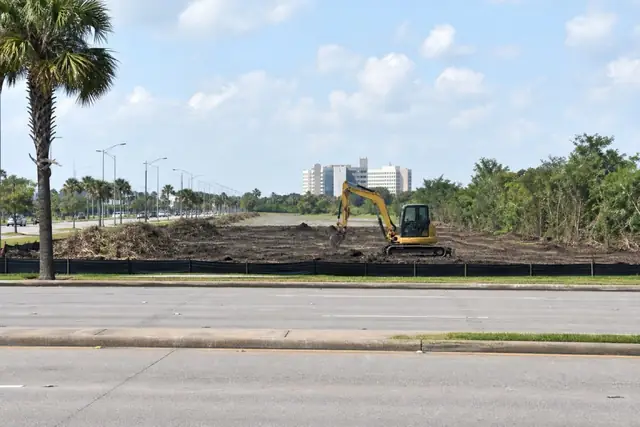

Bayshore Land Clearing puts Webster property owners in front of a local land clearing contractor for forestry mulching, brush removal, and site prep across the Webster area.
Webster is small in population — 12,499 at the 2020 census — and outsized in everything else: a NASA Parkway-corridor hub whose medical center district, retail miles, and hotel rows serve the whole Clear Lake area. Its land economy is commercial, and so is its clearing: infill pads behind the arterials, expansion tracts beside the medical campuses, and the scrub lots that hold value quietly until a developer's timeline arrives.
The work profile is compact commercial: smaller parcels than the greenfield boomtowns, tighter staging, more traffic exposure, and schedules driven by closing dates and permit windows. A Webster clearing quote is usually measured in days, coordinated with civil contractors, and executed with the erosion controls and frontage manners that busy-corridor work demands.
Pad sites on a working corridor
Clearing beside a five-lane arterial is choreography: trucks enter and leave without disrupting signal timing, mud stays off the public road, dust gets watered down, and the frontage reads managed from day one. Stormwater controls precede disturbance per the state construction program under TCEQ rules, and the City of Webster administers the local development standards the site plan answers to.
The vegetation on these infill parcels is predictable — tallow-dominated scrub on disturbed commercial ground, the invasive succession the Texas Invasives program describes — which makes production estimating reliable and schedules honest.
Holding land cleanly between deals
Webster parcels often wait years between acquisition and construction, and how they wait matters: a scrub-covered tract draws code attention, dumping, and neighbor complaints, while a mowed one holds value visibly. Standing maintenance arrangements — an annual or semiannual clearing pass — are the cheap answer, and they keep the eventual development clearing light. It's the same maintenance-economics argument that applies across the prairie, compressed into commercial terms.
Two corridor-specific notes: drainage on these flat commercial blocks routes through engineered systems that clearing must respect (the regional drainage context lives with the flood control district), and hurricane season is a real scheduling input for exposed corner tracts — the NHC outlook gets a look before major summer mobilizations on this coast.