 Bayshore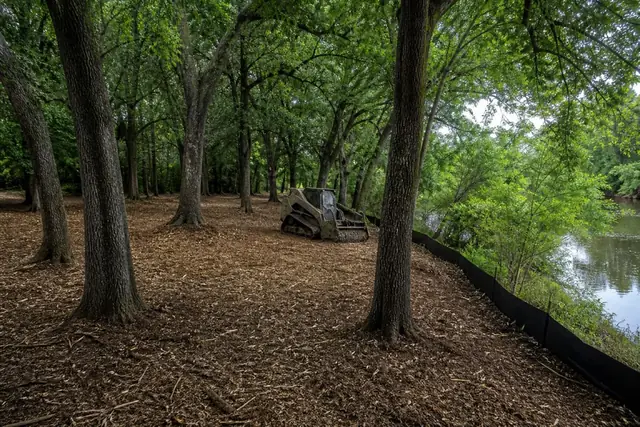
Bayshore Land Clearing puts Friendswood property owners in front of a local land clearing contractor for forestry mulching, brush removal, and site prep across the Friendswood area.
Friendswood was planted as a Quaker colony in 1895 and grew into one of the metro's most established large-lot suburbs — 41,213 residents (2020 census) with a green, wooded character its neighbors envy. The wooded character has a hydrological catch: much of the town drains to Clear Creek, and Harvey's 2017 flood put the creek's floodplain through many of those wooded backyards.
That geography defines the clearing trade here. Creekside parcels carry mature water oaks and elms worth keeping, an understory of tallow and yaupon worth removing, and high-water marks that tell the truth about where machines and debris decisions need extra thought. The prized Friendswood job takes the floodplain woods from impassable to park-like — canopy up, invaders out, sight lines through.
Clearing in a mapped floodplain
A meaningful share of Friendswood's acreage lies in regulated floodplain, and land work there answers to development rules meant to keep the creek's storage and flow intact — checks that run through the city's permitting rather than a contractor's judgment call. The regional context is well documented in the county flood history: Clear Creek's watershed has flooded repeatedly, and Harvey set the modern benchmark.
For routine vegetation clearing the practical rules are: no fill or grade changes without the floodplain check, debris staged out of the flow path and hauled promptly, and bank vegetation on the creek itself left to do its erosion-control job. Mulch-in-place methods suit floodplain parcels well — no burn piles, no windrows waiting to become storm-borne debris rafts. Rainfall climatology from the NWS Houston/Galveston office is the planning backdrop for all of it.
Restoring the creekside woods
The best Friendswood parcels are genuine bottomland woods — water oak, elm, green ash — that decades of tallow seeding have been quietly converting to invasive monoculture from below. Selective clearing reverses the conversion: the native canopy stays, the tallow cohort comes out before it reaches the canopy itself, and the understory opens back up to filtered light. The stakes of leaving it alone are documented at the state's Chinese tallow profile — in Gulf Coast bottomlands, tallow doesn't share; it replaces.
Done well, the result is the rare clearing job that increases habitat value while it increases usability — more native mast and structure, less green wall. Landowners wanting to push further toward restoration can draw on bottomland guidance from the Texas A&M Forest Service.