 Bayshore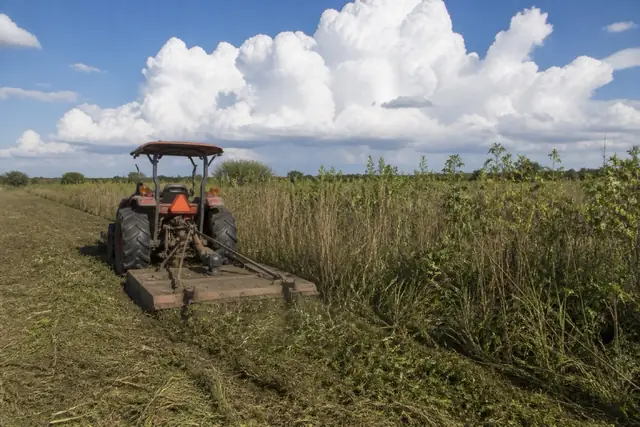
Bayshore Land Clearing puts Pasadena property owners in front of a local land clearing contractor for brush & underbrush clearing in Pasadena and the bayshore cities around it.
Give a Pasadena lot two unmowed summers and the prairie writes its own plan for it: bluestem and ragweed to shoulder height, dewberry and greenbrier lacing through, tallow and huisache seedlings hardening from weeds into woody stems. Underbrush clearing is the reset — a bush hog, flail mower, or compact mulcher taking the parcel back down to ground level before the scrub graduates into trees that cost far more to remove.
The right tool tracks the growth stage. Herbaceous cover and pencil-thick saplings fall to a heavy rotary cutter in a fast, inexpensive pass. Once stems reach wrist thickness, a mulching head does cleaner work, shredding rather than beating the material down. A contractor who sees the parcel first quotes the pass that actually fits it — and flags the spots, like old fence wire hidden in the grass, that chew up blades and schedules.
Timing has a wildlife wrinkle on this coastal prairie, too. The grassland edges around the bayous carry ground-nesting birds in spring, and clearing outside the March-through-summer nesting window is both neighborly and simpler. For most owners the practical calendar is the same one the clay prefers anyway: cut in late summer or fall, when the ground is hard and the year's growth is done.
Why mowed brush comes back different
A mowing pass resets height, not species. The grasses return as grass, but every woody stem that got cut — tallow especially — answers with multiple sprouts from the same root system, which is how a once-mowed lot can come back brushier than it started. The species profiles at Texas Invasives lay out the regrowth habits, and they are the reason a good clearing plan names the species on the parcel, not just the height of it.
The workable strategy on this prairie is rhythm: one honest reclamation pass to take the parcel down, then a cheap annual mow that beheads the woody regrowth while it is still soft. Miss two or three years and the compounding starts over. Range and pasture guidance from Texas A&M AgriLife Extension covers the mowing-frequency math in detail for Gulf Coast conditions.
Overgrown lots and the code-enforcement clock
Inside city limits, tall growth is not just an eyesore problem. The City of Pasadena enforces weed and brush standards on developed and vacant lots alike, and surrounding bayshore cities run similar programs — a notice, a compliance window, then abatement at the owner's expense. For absentee owners of vacant parcels, a scheduled clearing pass is almost always cheaper than a city-contracted one plus the lien paperwork.
There is also a drainage angle that flat land makes non-optional. Brush that chokes the roadside ditch or a back-lot swale holds water on the parcel and pushes it toward the neighbors, and on a prairie managed by the Harris County Flood Control District's network of channels, keeping private ditches open is part of keeping the whole block dry. A clearing quote here should always include the ditch line, not just the open middle.