 Bayshore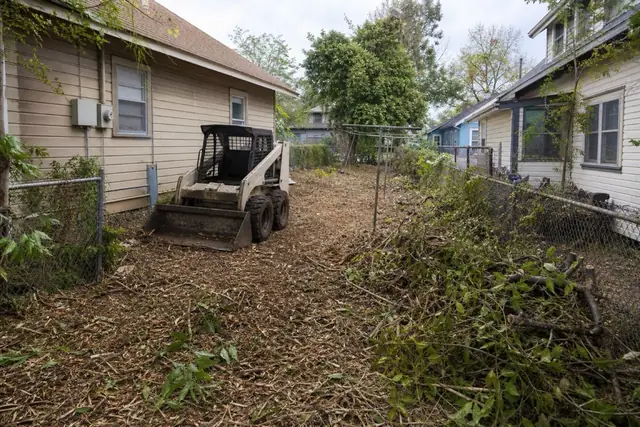
Bayshore Land Clearing puts South Houston property owners in front of a local land clearing contractor for forestry mulching, brush removal, and site prep across the South Houston area.
South Houston packs 16,153 people (2020 census) into barely three square miles of street grid platted before the First World War — a working-class city-within-the-metro where the lots run narrow and deep and the alleys remember when everyone kept chickens. Clearing here is small-machine craft: compact skid-steers and walk-behind equipment threading side yards a full-size carrier could never enter.
The signature job is the deep-lot cleanout. Behind the bungalows, decades of tallow volunteers, vine mats, and accumulated growth have shortened many usable yards by half, and the back fences have disappeared entirely. A day of tight-access mulching restores the whole depth of the parcel — and with it, the garage apartment, garden, or workshop plans these lots have always been able to carry.
Small lots, old infrastructure, careful machines
A century-old grid means century-old surprises: clay sewer laterals shallow enough to matter, remnant cisterns and well casings, buried fence lines from three fence generations ago. Tight-access clearing in South Houston starts with the 811 locate and an owner conversation about what the lot used to hold, and the machine work proceeds with the assumption that something is down there. Utility-awareness practice promoted by state programs, including the TCEQ, exists for exactly these blocks.
Weed-and-brush enforcement is active in small cities that sit shoulder-to-shoulder with neighbors — tall growth on a 50-foot-wide lot is everyone's business fast. A maintenance pass keeps the letters away, and on rental and inherited properties, a standing annual mow of the back lot is the cheapest property management there is. General nuisance-vegetation context is available through Harris County and city offices.
The pecan-and-clothesline landscape
South Houston's mature canopy is domestic, not wild: pecans planted by grandparents, hackberries the birds planted, fig trees by the back steps. Good clearing respects that inheritance — the job is extracting the invasive tangle from around the keeper trees, not leveling the lot. Species guidance from Aggie Horticulture helps owners sort which volunteers are worth keeping (a self-planted pecan can be a gift) and which — the tallow, always the tallow — are on the removal list, as the state invasives program makes plain.
Debris logistics matter more on the grid than anywhere: no acreage to absorb chips means loads get measured, staged, and hauled clean, and the street stays passable for the neighbors the whole time. It's a courtesy standard, and in a city this compact, it's also the contractor's reputation walking.