 Bayshore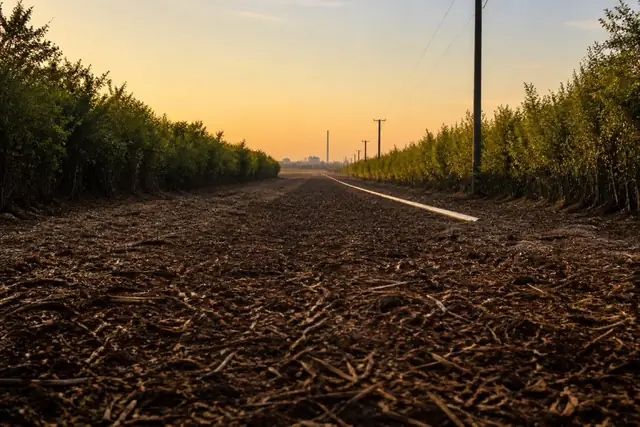

Bayshore Land Clearing puts Pasadena property owners in front of a local land clearing contractor for right-of-way clearing in Pasadena and the bayshore cities around it.
The southeast Harris County landscape is laced with corridors most people never notice: pipeline easements crossing the prairie between the plants, distribution lines running the section lines, drainage rights-of-way threading between subdivisions. Every one of those corridors carries a maintenance obligation — vegetation kept below spec so lines can be inspected, accessed, and operated — and every growing season on this coast pushes back.
Right-of-way work rewards mulching more than almost any other clearing application. The corridors are linear, the target vegetation is exactly the fast woody regrowth a drum head eats, and the no-burn, no-haul economics of grinding in place are decisive at corridor scale. A tracked mulcher walks the line, the canopy comes down to grade, and the corridor is left in a chip bed that suppresses part of next year's flush.
The client mix is broader than the pipeline majors, who mostly carry standing contracts. The work that moves through a local operator is the fringe of the system: a mid-stream operator's neglected lateral, an MUD's drainage easement, a private access easement two landowners share, a developer's obligation to clear a utility corridor through a new section. Scoped work, defined edges, before-and-after documentation.
Working clean next to bayous and drainage
Many easements on this prairie exist because of water — drainage corridors feeding the bayou network the Harris County Flood Control District maintains. Clearing beside them carries obligations regular field work doesn't: equipment stays off unstable banks, cut material stays out of the channel where it becomes the next storm's blockage, and ground disturbance near the waterline is minimized so silt doesn't ride the next rain into the system. The practices are standard stormwater discipline under TCEQ rules, and they're also how a contractor keeps getting invited back.
Where corridors approach the bay side, the sensitivity rises again — the marsh edges and prairie remnants along Armand Bayou and the bayshore are the county's most valuable habitat acreage, watched over by groups like the Galveston Bay Foundation. Precision matters: mulch to the corridor line, not a machine-width past it.
Cycle length: the economics of not waiting
The single biggest lever on right-of-way maintenance cost is how far the corridor is allowed to go between passes. Regrowth on this coast is not linear — a corridor mulched two years ago clears again at a fast walk, while a corridor left five years has hardened into stems that halve production and double machine wear. The species driving the difference is the usual suspect: tallow's growth rate, documented at Texas Invasives, sets the clock for the whole corridor.
For asset managers, the practical translation is that a two-to-three-year mulching cycle usually minimizes cost per corridor-mile over a decade, even though each individual pass looks like an avoidable expense in a budget year. Vegetation-management guidance from the Texas A&M Forest Service supports the same short-cycle logic for defensible access generally.