 Bayshore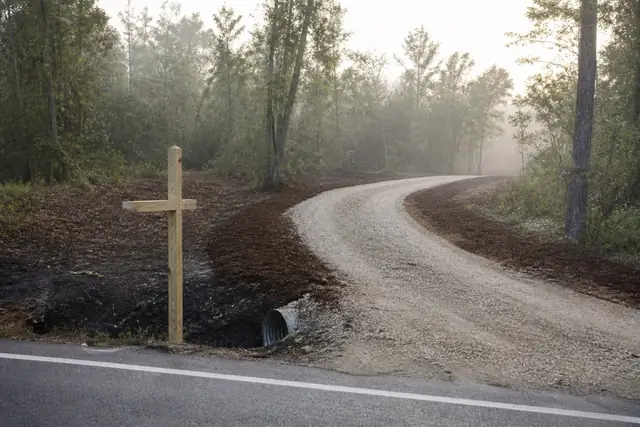
Bayshore Land Clearing puts Pasadena property owners in front of a local land clearing contractor for access road & driveway clearing in Pasadena and the bayshore cities around it.
Acreage without access is scenery. A homesite with no way in yet, hunting or hobby ground that wants a passable lane, a back pasture unreachable since the old track brushed over — each is the same three-part job: clear the corridor, shape the ground, and armor the surface against the clay's opinion of vehicle traffic.
The corridor pass runs wider than the road. A lane that will carry trucks wants vegetation cleared well past the wheel paths — room for drainage on both sides, sight lines at the bends, and clearance overhead for the concrete truck and the fire apparatus that will someday need the route. Cutting the corridor tight to the tire line is the classic false economy; the brush leans back in within two seasons and the ditches never fit.
Then the prairie's rule asserts itself: the road must be higher than the water. On gumbo clay a graded-flat lane becomes a canal in the first wet week. Lasting drives here are crowned, ditched on both sides, and surfaced with compacted crushed material over a stabilized base — with the ditch water given somewhere legal to go.
Culverts and the county connection
At the point a new drive ties into a public road, the roadside ditch outranks you — legally and hydraulically. The crossing takes a culvert sized and placed so the ditch keeps flowing under your entrance, and in most of the service area that connection point needs sign-off from the road authority: Harris County for unincorporated frontage, the city public works office inside municipal limits. An undersized or sag-set pipe backs water up the ditch line, and the neighbors upstream will know exactly whose driveway did it.
Along the drive itself, low spots get their own cross-culverts so water passes under rather than over. It's cheap insurance at build time and expensive retrofit later — the difference between a road that sheds the fifty-inch rain year and one that washboards and potholes with every system that comes up the Houston/Galveston forecast area.
Surfacing choices on expansive clay
The clay under a bayshore drive — mapped in series like Beaumont clay — is strong when dry and gone when wet, so the surface build matters more here than in sandier counties. The working standard is geotextile fabric over the shaped subgrade (keeping clay and rock from trading places), then compacted crushed limestone or concrete base in lifts. Skipping the fabric saves money exactly once.
Maintenance is a schedule, not a rescue: a regrading pass to pull material back to the crown every year or two, ditches kept open, and potholes patched while they're saucers instead of bathtubs. Owners who keep that rhythm get decades from a gravel drive; owners who don't buy the road again. Rural-road guidance from extension sources covers the same fundamentals for farm and ranch lanes.