 Bayshore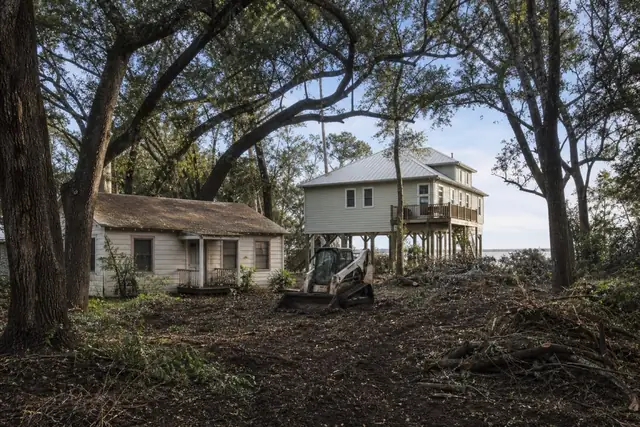
Bayshore Land Clearing puts Shoreacres property owners in front of a local land clearing contractor for forestry mulching, brush removal, and site prep across the Shoreacres area.
Shoreacres is a village-scale city — 1,566 residents at the 2020 census — tucked between La Porte and the bay under a canopy of live oaks that predates most of its houses. The town absorbed some of Hurricane Ike's worst surge damage and rebuilt around its trees, which tells you what clearing means here: understory work, storm-recovery cleanup, and leaner removal done beneath a canopy nobody wants touched.
The typical parcel job takes the yaupon and vine layer out from under the oaks, extracts the storm-killed stems the regrowth has been hiding, and leaves the shade intact over cleaned ground. It's slower, more selective machine work than open-prairie clearing — half operator skill, half judgment about what stays — and it's what separates a parcel that reads logged from one that reads loved.
Understory extraction beneath old oaks
Working under mature live oaks imposes rules open-lot clearing never thinks about: machine weight stays off the critical root zones, mulching heads work at reach into the thicket rather than driving through it, and wounds to trunks and surface roots are treated as failures, not incidents. Tree-care fundamentals from the Texas A&M Forest Service underpin the approach — the oaks are the asset; everything else on the lot is negotiable.
The understory being removed is the usual coastal cast, yaupon densest among them. Kept in bounds, yaupon is a legitimate native screen; released for a decade, it walls off the ground layer completely — the species' habit is described at USDA PLANTS. Shoreacres jobs often keep a shaped band of it along boundaries and clear the interior to open shade.
A small city's relationship with big water
Ike put feet of bay water through Shoreacres, and the town's rebuild — elevated homes beside surviving cottages — is the visible record. For land work, the storm's legacy is practical: buried debris in older lots, storm-dated thickets where structures once stood, and a community-wide respect for drainage that makes ditch and swale maintenance an easy sell. The regional flood record maintained by the Harris County Flood Control District gives the fuller context.
Storm preparedness shapes the calendar too: spring is for removing the dead and compromised stems the winter revealed, because the hurricane season outlook arrives in May whether the yard is ready or not.