 Bayshore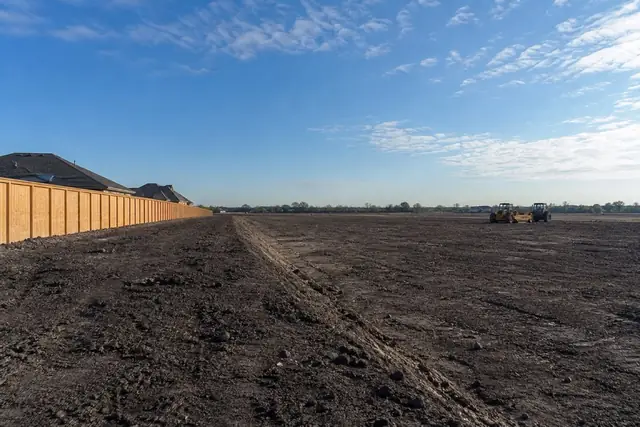
Bayshore Land Clearing puts Pearland property owners in front of a local land clearing contractor for forestry mulching, brush removal, and site prep across the Pearland area.
Pearland's name remembers its orchard-and-rice past, but its present is scale: 125,828 residents at the 2020 census and two decades on the national fastest-growing lists. The land conversion machine still runs — flat black-clay parcels along the Highway 288 and Broadway corridors clearing for subdivision phases, retail pads, and the infrastructure between them — and clearing is that machine's first gear.
Outside the development pipeline, Pearland holds a belt of surviving acreage: old family parcels with rice-levee lines still visible in the grass, horse places, and holdout tracts surrounded by subdivision walls. Those owners buy the classic reclamation menu — brush back to grass, fence corridors reopened, ponds recovered — on some of the deepest, blackest gumbo in the region.
The old rice prairie under the new streets
Pearland sits on the same coastal-prairie vertisols as the rest of the shelf — profiles like the Lake Charles series — leveled decades ago for rice irrigation. Those old field levels are an inheritance for modern dirt work: many parcels are already remarkably flat, but their engineered drainage assumed canals and field gates that no longer exist, so clearing and regrading has to give the water a modern route. Drainage criteria and flood context for the area's watersheds are extensively documented by the regional flood control district whose jurisdiction borders the city.
Where development scale is involved, the state stormwater program applies as everywhere — controls in before disturbance, administered under TCEQ rules.
Holdout acreage between the subdivision walls
The acreage tracts that haven't sold carry a particular brush profile: decades of tallow seeding from every direction (each surrounding subdivision's ornamental gaps included), huisache on the old field edges, and rank bluestem where the cattle used to keep it short. Reclamation returns the parcels to grass and options — and for owners maintaining agricultural use, keeps the appraisal district conversation straightforward. Pasture-recovery guidance for these soils comes from Texas A&M AgriLife Extension.
The invasive pressure is real and directional — tallow's colonization speed on disturbed Gulf prairie is the driver, per the Texas Invasives program — so reclaimed Pearland parcels get the same standing advice as everywhere on this prairie: schedule the cheap annual pass, or budget for the expensive quinquennial one.