 Bayshore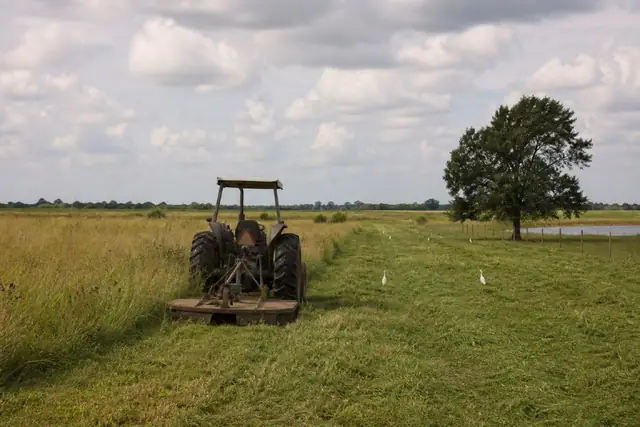
Bayshore Land Clearing puts Pasadena property owners in front of a local land clearing contractor for pasture & acreage reclamation in Pasadena and the bayshore cities around it.
Around the edges of the bayshore cities — out past League City, off the farm roads toward Pearland, in the acreage pockets the subdivisions haven't reached — sits a generation of small pastures going backward. The cattle left, the shredding stopped, and ten years of Gulf Coast growing seasons did the rest: bluestem gone rank, tallow and huisache staking claims, the stock pond disappearing behind a green wall. Reclamation is the project that reverses the slide.
The work is a sequence, not a single pass. First the woody invasion gets sorted — tallow and huisache mulched or grubbed depending on stem size and the owner's regrowth tolerance — then the rank herbaceous layer comes down with heavy shredding, then the problem spots get individual attention: the pond dam cleaned, the fence corridors opened, the wet corner that breeds mosquitoes given a drainage answer.
What comes back is optionality. A reclaimed parcel can carry a few head again, qualify for the county's agricultural appraisal treatment where the use supports it, host the barn or the arena, or simply be land you can see across. Every one of those futures starts with the same first step: getting the brush off and the grass back in charge.
Grass first: the cheapest brush control there is
A vigorous grass sward is the pasture's own defense — it shades seedbeds, competes for water, and makes every subsequent mowing pass effective. That's why serious reclamation plans spend as much thought on what grows after the clearing as on the clearing itself. Forage guidance from Texas A&M AgriLife Extension covers the Gulf Coast standards — bermudagrass and bahiagrass for working pasture, native mixes where wildlife value matters — and the county extension office will talk specifics for your soil.
The native-prairie option deserves a real look on this landscape. The tallgrass systems preserved at the Armand Bayou Nature Center show what this ground grew before the plow: little bluestem, switchgrass, and a seasonal wildflower cycle that handles drought and deluge alike with no fertilizer bill. For owners more interested in doves, deer, and low maintenance than stocking rates, a native reseed after clearing is often the better long game.
Ponds, wet corners, and the water that comes with acreage
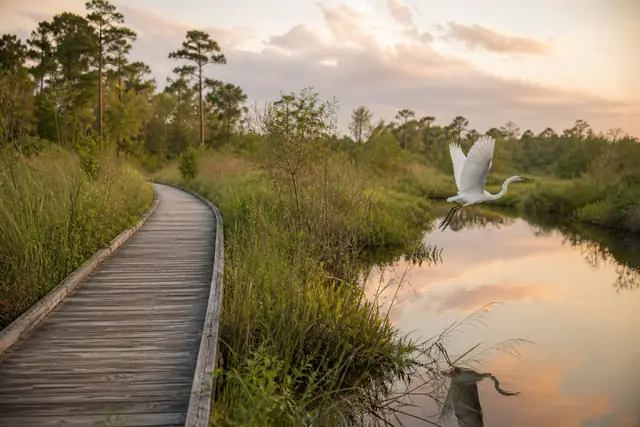
Nearly every reclaimed parcel on this prairie has a water feature, planned or otherwise. Old stock ponds silt in and brush over; low corners collect runoff the flat ground can't shed. Reclamation is the natural moment to address both — an excavator already mobilized can clean a pond edge, reshape an overflow, or cut the shallow swale that finally drains the boggy corner. Guidance on small-pond management is available through the Texas Water Development Board and extension publications.
One boundary to respect: where acreage runs down to a bayou or regulated channel, the banks and floodway belong to a different rulebook. Work near Harris County Flood Control District rights-of-way needs to stay on the private side of the line, and clearing that would alter flow in a mapped floodway can require agency sign-off. A contractor who works this county knows where those lines run and quotes accordingly.