 Bayshore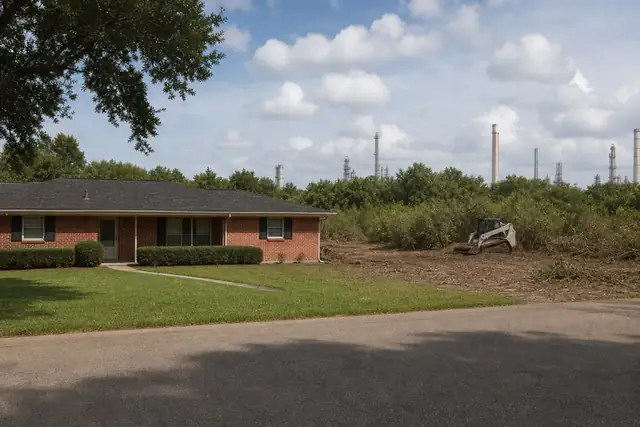

Bayshore Land Clearing puts Deer Park property owners in front of a local land clearing contractor for forestry mulching, brush removal, and site prep across the Deer Park area.
Deer Park sits on the ground where Texas won its independence — the San Jacinto battleground is effectively the town's front porch — and its 34,495 residents (2020 census) live mostly on generous postwar lots that were carved from the same flat prairie. Those deep backyards are the classic Deer Park clearing job: the front half kept as St. Augustine lawn, the back half quietly lost to tallow and yaupon regrowth over a decade of busy years.
Machine work here is gate work. Compact tracked mulchers thread the side-yard gap, take the back-lot thicket to grade in a day, and leave chips instead of debris piles — no burning inside city limits, and no convoy of trailers down a residential street. The reward for a cleared back half on these lots is real: shop space, pool space, or just the yard the lot always promised.
Clearing around Deer Park's petrochemical rhythm
Deer Park's economy runs on shift work at the plants along the Ship Channel, and its home projects run the same way — scheduled tight, planned around days off. The practical notes for clearing here are simple: the City of Deer Park enforces standard nuisance-growth rules on lots that get away from their owners, machine work respects ordinary weekday hours, and the 811 locate matters doubly in a town threaded with pipeline corridors and utility easements.
The soil is the same near-black gumbo as the rest of the prairie shelf, which means the same seasonal calculus: hard and machine-friendly in a dry August, greasy and rut-prone after spring rain. Local forecast context from the NWS Houston/Galveston office sets the schedule more reliably than any calendar date.
Backyards that back up to history
The eastern edge of town runs toward the San Jacinto Monument and its surrounding marshes, and lots on that side of Deer Park carry a little of the battleground landscape in them — older hackberries, wetter corners, and the kind of view that makes owners want the brush down and the sight line open. Clearing near the preserved areas follows the same rule as everywhere on the bayshore: private work stays on the private side of the line, and drainage stays unblocked toward the public system that Harris County Flood Control maintains.
For acreage-style parcels on the city's fringe, the full service menu applies — grubbing, grading, culvert-set driveways — with quotes written after a walk of the actual ground. Storm-season prep gets particular attention this close to the water: pre-June removal of dead and leaning trees is the cheapest insurance a Deer Park lot can buy, a point the Texas A&M Forest Service makes in its hurricane-readiness material.