 Bayshore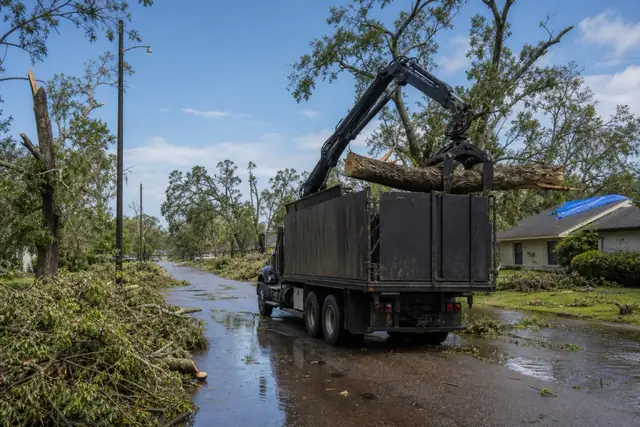

Bayshore Land Clearing puts Pasadena property owners in front of a local land clearing contractor for hurricane debris cleanup in Pasadena and the bayshore cities around it.
Living between the Ship Channel and Galveston Bay means living in the landfall zone, and every few years the Gulf collects. Ike rearranged the bayshore in 2008; Harvey drowned it in 2017; and the unnamed derechos and tornado-spawning squall lines between them drop trees without the courtesy of a forecast cone. When it happens, debris work is the first trade back on the street: roads opened, driveways uncovered, trunks off fences and roof lines.
Storm work is its own discipline, not regular clearing done faster. Downed timber is loaded — trunks under tension, root plates that can stand back up when the stem is cut, hangers lodged overhead waiting for a vibration. The safe sequence runs heavy equipment first: a grapple takes the loaded pieces a chainsaw crew shouldn't touch, then saw work sections what's safely on the ground, then the mess gets staged for whichever disposal route the event allows.
Disposal is event-dependent on purpose. After declared storms, cities and the county typically run curbside vegetative-debris pickup with specific staging rules — separate piles, clear of hydrants, meters, and drains. Outside those windows, material either mulches on site or hauls to a processing yard. A local contractor tracks which regime is active because it changes the quote materially.
Triage: what to touch, what to leave for the pros
The dangerous debris is rarely the obvious debris. A trunk lying quietly across a fence may be spring-loaded with tons of force; a 'small' hanger overhead is a spear on a timer; and anything — anything — in contact with a power line belongs to the utility, full stop. The storm-recovery guidance published by the Texas A&M Forest Service is blunt about post-storm chainsaw injuries: they cluster among homeowners in the first days after landfall, working tired on loaded wood.
The homeowner-safe share of the job is real but modest: limbs on the ground with no tension, raking, staging brush at the curb per instructions. For leaners, hangers, root-plate trees, and anything touching structures, the money spent on equipment and experience buys the version of the story where nobody gets hurt. Watching the seasonal outlook from the National Hurricane Center and pre-arranging a contact beats dialing cold into the post-storm rush.
The cleanup that starts before the storm
The debris load that never happens is the one you bought for pennies back in May. Pre-season work — removing dead and structurally failing trees, thinning tallow (a brittle-wooded species that sheds in every serious blow), clearing the drainage paths that must run when the rain arrives — converts emergency-rate work into scheduled-rate work. Local preparedness material from Harris County and the NWS Houston/Galveston office makes the same point about every category of hurricane prep: June-you is grateful for what March-you scheduled.
After a storm, resist the season's second hazard: the out-of-state pickup crews that follow landfalls down the coast. Photograph everything for insurance before touching it, get scopes in writing, and prefer contractors who can name the local disposal rules — a detail transient crews reliably can't fake. Requests through this site route to a contractor who worked this area before the storm and will be here after.