 Bayshore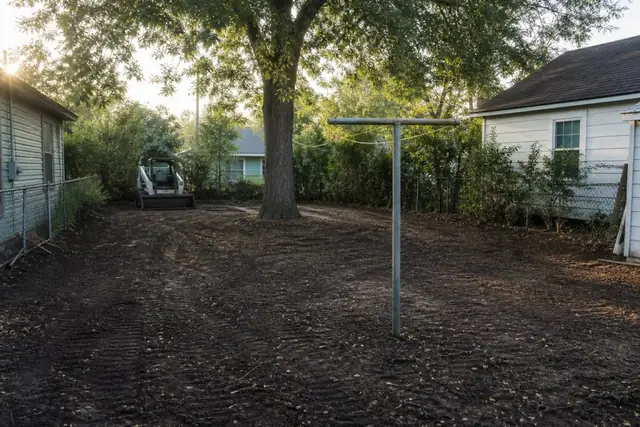
Bayshore Land Clearing puts Jacinto City property owners in front of a local land clearing contractor for forestry mulching, brush removal, and site prep across the Jacinto City area.
Jacinto City was built almost overnight for wartime workers and returning GIs — a pocket-sized east-side city of 9,613 (2020 census) whose modest frame homes and small lots have been holding families for eighty years. Clearing work here is measured in yards, not acres: a backyard yaupon wall that finally has to go, a corner lot the vines claimed, a garage apron lost under a decade of volunteer growth.
Small scale doesn't mean small stakes. On a lot this size, reclaiming six hundred square feet of thicket returns a meaningful fraction of the whole parcel, and the difference between a machine day and a landscaping season. Mini-skid mulching and hand-crew extraction handle the access; the pecan by the clothesline stays; the tallow and privet do not.
The postwar lot, eighty growing seasons later
These blocks were platted bare and planted by hand, and time has sorted the plantings into keepers and colonizers. The keepers — pecans, figs, the occasional bur oak — earn careful work around their roots. The colonizers are the region's standard cast: privet and tallow in the fence rows, hackberry volunteers in every unmowed corner, vine mats stitching it together. Identification help for sorting one from the other is freely available from Aggie Horticulture and the Texas Invasives program.
The clearing itself is neighbor-scale work: quiet-hours scheduling, debris hauled the same day, and chips offered to whoever on the block wants garden mulch. In a city where the houses sit close, how the work is done travels faster than what it cost.
Drainage on the flats east of the Loop
Jacinto City's grid drains the way all these east-side flats do — slowly, through modest ditches, toward bayous with well-documented tempers. The county's storm record, kept by the Harris County Flood Control District, includes plenty of chapters written near this zip code, and the household-scale lesson is consistent: keep the lot's swales and the street ditch line open, because they're the only slope this ground has.
A yard clearing here routinely doubles as drainage maintenance — the yaupon wall coming out of the back line often reveals (and reopens) the low route the water was always supposed to take. Local rainfall context from the NWS Houston/Galveston office explains the urgency: this coast doesn't do gentle rain.