 Bayshore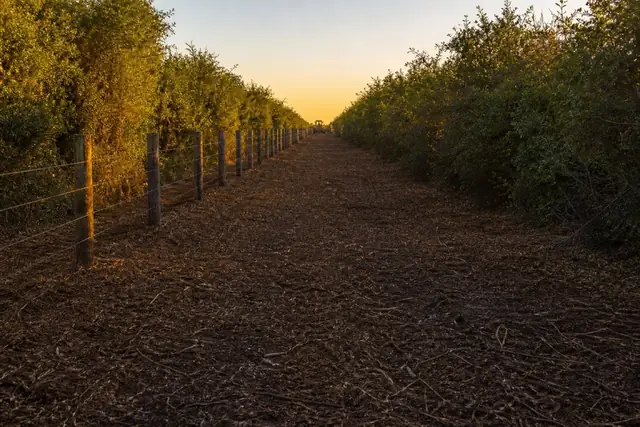
Bayshore Land Clearing puts Pasadena property owners in front of a local land clearing contractor for fence line clearing in Pasadena and the bayshore cities around it.
Fences on the bayshore prairie lose to the brush on a schedule you can set a calendar by. Tallow seedlings come up in the wire's shelter where no mower reaches, yaupon knits through the strands, and within a decade the wire is pulling trellis duty instead of boundary duty — invisible, unfixable, and slowly leaning under the load. Fence line clearing sends a mulching head the length of the corridor — each side worked where access permits — and returns the wire to daylight.
The standard prescription is a mowed and mulched corridor wide enough to maintain — commonly ten to fifteen feet on working land, tighter on residential lines — with woody stems taken to grade and the corridor left in chips. Where the old fence is coming out entirely, clearing first is the only sane order: pulling wire out of live brush is slow, dangerous work, while stripping a cleared line is an afternoon.
For new fence construction, the cleared corridor is what makes accurate building possible: post lines can be sighted, corners actually square, and the builder isn't pricing in a day of chainsaw work before the first post. Many owners schedule clearing and fence replacement as one coordinated job for exactly that reason.
Old wire, hidden trash, and the corridor walk
Every mature fence corridor hides its history: broken strands coiled in the grass, T-posts leaned into trees and swallowed, the occasional buried corner brace. Steel and mulcher drums disagree violently, so a professional job starts with a corridor walk — flags on every visible hazard before the machine starts. Owners can accelerate this by marking what they know: the old gate that was wired shut, the wash where trash collected, the stretch grandad reinforced with bedframes, a rural-Texas tradition the extension service's fencing publications tactfully omit.
Trees grown through the wire get individual decisions. A hackberry with a strand through its heart can be cut and the stub left, or worked out carefully if the wire must be salvaged; a good live oak on the line usually earns a detour in the new fence rather than a saw. The corridor is also the one spot that tolerates zero boundary doubt — settling an uncertain line before clearing beats relocating a fence after it.
Keeping a cleared line cleared
The forces that buried the fence resume the day the machine leaves: birds perch on wire and plant tallow beneath it — a dispersal pattern the species' profile documents — and the corridor's disturbed ground is a fresh seedbed. The cheap counter is running a mower down the corridor a couple of times a season while sprouts are still tender; the corridor width was chosen to make that pass a quick tractor errand instead of a project.
On grazed land there's a bonus ally: cattle browse pressure along a cleaned line helps suppress regrowth the mower misses. And for lines along county road frontage, a maintained corridor keeps sight triangles open at gates and corners — a small safety point that road authorities in Harris County and the bayshore cities take seriously on their own rights-of-way.