 Bayshore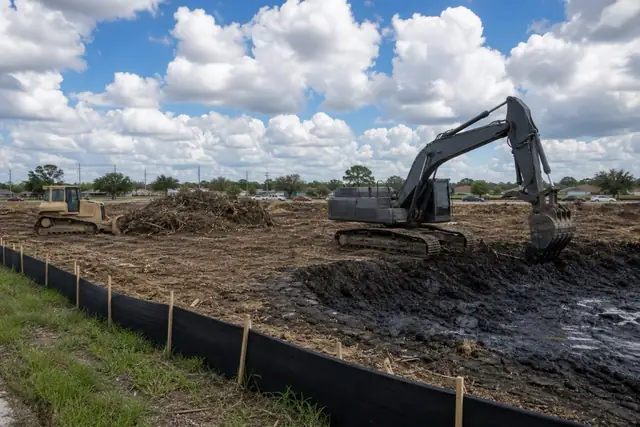

Bayshore Land Clearing puts Pasadena property owners in front of a local land clearing contractor for commercial site clearing in Pasadena and the bayshore cities around it.
Commercial clearing on the bayshore is schedule work. The pad-ready date anchors a chain of trades, and clearing sits at the front of it — which means the clearing contractor's real product is predictability: mobilize when promised, produce acres per day as estimated, and hand the earthwork contractor a site that matches the plans. The vegetation itself — tallow stands, yaupon blocks, scattered mature oaks — is the easy part by comparison.
Scope discipline separates smooth projects from disputes. A commercial clearing package here typically covers vegetation removal to spec (mulched to grade or grubbed clean by zone), protection fencing around trees designated to remain, stripping and stockpiling where the dirt plan calls for it, and the erosion controls the site's stormwater permit requires from day one. Each is a line item; a bid that blurs them is a bid that changes later.
The tree-save plan deserves early attention in this market. Municipalities across the service area increasingly attach landscape and tree-preservation conditions to commercial permits, and a mature live oak preserved correctly — protective fencing out at the canopy edge before any track turns — is worth real money against those requirements. Preserved badly, it's a dead tree with a change order attached.
Stormwater compliance from the first machine hour
Land disturbance at commercial scale triggers the state's construction stormwater program — permit coverage, a pollution-prevention plan, and controls installed before clearing begins, all administered by the TCEQ. On this flat clay the controls aren't paperwork theater: a cleared site sheds silt with the first storm, the receiving system is the bayou network that drains through the flood control district's channels, and inspectors in this county have seen every shortcut before.
A clearing contractor fluent in the sequence — perimeter controls first, stabilized exit second, then production clearing — keeps the site's compliance record clean from hour one. That fluency costs nothing extra and saves the general contractor the worst kind of schedule risk: the stop-work kind.
Phasing, dust, and being a decent neighbor on an arterial
Commercial parcels here usually front busy corridors — Fairmont Parkway, Spencer Highway, the feeder roads — with occupied businesses and subdivisions at the property line. Production clearing next to neighbors runs on a few disciplines: work hours matched to local ordinance, dust suppressed with water when the clay surface dries to powder, debris and mud kept off the public road, and the perimeter left looking managed rather than ransacked. The City of Pasadena and its neighboring municipalities each carry their own nuisance and hauling standards; a local contractor arrives knowing them.
Phasing is the other quiet skill: clearing in stages matched to the earthwork schedule keeps bare-ground exposure short — a direct erosion-control benefit the stormwater plan can take credit for — and preserves vegetation buffer along the frontage until the last responsible moment. Hurricane-season awareness belongs in the phasing conversation too; the National Hurricane Center's outlooks are a legitimate scheduling input on this coast between June and November.